Moving to Malaysia: the complete, date-checked guide
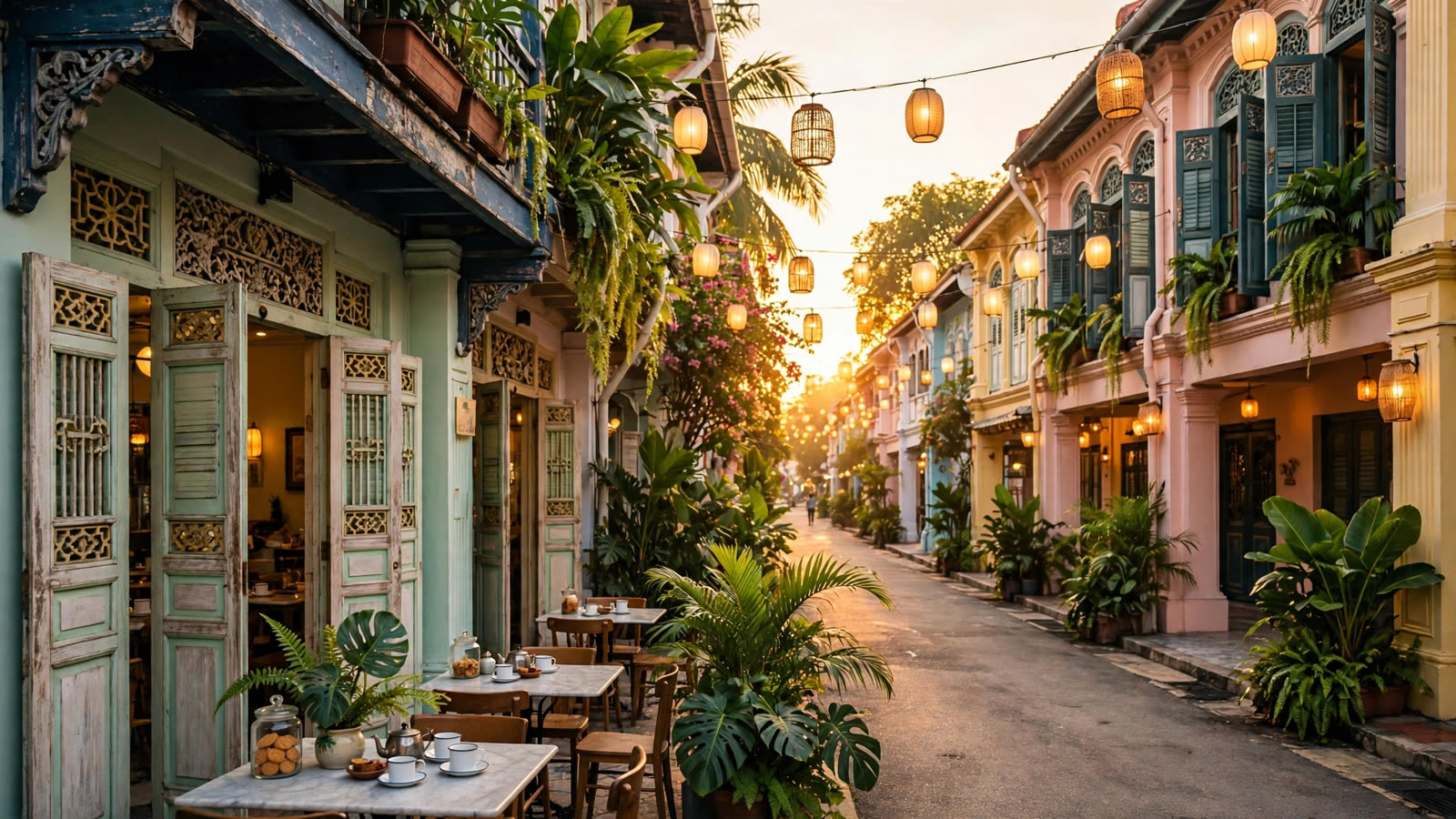
MM2H is now a property-and-deposit deal, not an income deal — superb infrastructure, honest fine print.
An ordinary Tuesday: kopi and roti canai at a kopitiam for a dollar, a work morning in air-conditioned comfort, a thunderstorm at four that rearranges nothing, and a hawker-centre dinner where the char kway teow stall has a queue of people who know. Weekends are Penang food runs or a 45-minute flight to somewhere beachy.
Rent from ~$450/moYour money goes ~106% further than in the USEntry line: US$150,000 fixed deposit + property ≥RM 600,000 (≈US$140,000)Emergency: 999
1-bed from ~$450/mo in KL outside the centre; Penang similar (indicative, checked Nov 2026) · Cost anchors are indicative — the residency figures below are the verified ones.
Advertisement
Malaysia rebuilt MM2H in 2024 and changed its nature: the income test is gone, replaced by a fixed deposit plus a mandatory property purchase — a capital deal, not a pension deal. In exchange you get Southeast Asia's most liveable infrastructure: English everywhere, elite private hospitals at regional prices, and a tax rule that currently exempts remitted foreign income until 2036. The fine print is unusually honest if you read it: no working on Silver/Gold, a 10-year lock on the property, applications only through licensed agents, and no path to permanent residency at all. Choose it for the life, with the structure clear-eyed.
The residency routes
MM2H — Silver tier
The 2024-rebuilt MM2H: NO income or liquid-asset test anymore. Instead: a US$150,000 fixed deposit in a Malaysian bank + a mandatory property purchase of at least RM 600,000 (≈US$140,000), a RM 1,000 fee, and a 5-year pass. Applications ONLY through a MOTAC-licensed agent. Two locks to price in: the property can't be resold for 10 years (upgrading excepted), and under-50s owe 90 days a year in Malaysia. Up to 50% of the deposit can be released after year 1 for property/education/medical costs.
The line: US$150,000 fixed deposit + property ≥RM 600,000 (≈US$140,000)
Working: Silver and Gold MM2H holders may NOT work or run a business in Malaysia. (The old pre-2021 part-time-work exception for over-50s is history — it is not in the current terms.)
How long: 5-year pass, renewable.
Leads to: Explicitly NOT to permanent residency — the Tourism Minister has said so on the record. MM2H is a long, comfortable status, not a settlement ladder.
Source: MOTAC MM2H terms (mm2h.gov.my) · checked Nov 2026 · secondary · ⟳ Terms were rebuilt in 2024 (deposit/property model) and tiers repriced by announcement — verify current tier table at mm2h.gov.my before committing to a property.
MM2H — Platinum tier (the work-allowed one)
US$1,000,000 fixed deposit + property ≥RM 2,000,000 (≈US$465,000) + a RM 200,000 fee buys a 20-year pass — and the only MM2H tier where business, investment and career activity in Malaysia are permitted. (Gold sits between: US$500,000 deposit + RM 1,000,000 property, 15 years, fee RM 3,000 — still no working.)
The line: US$1,000,000 fixed deposit + property ≥RM 2,000,000 (≈US$465,000)
Working: Platinum ONLY: business/investment/career activity permissible in Malaysia. Silver/Gold: prohibited.
How long: 20-year pass.
Leads to: Still not a PR path — but two decades of certainty.
Source: MOTAC MM2H terms (mm2h.gov.my) · checked Nov 2026 · secondary · ⟳ 2024 terms; verify at mm2h.gov.my.
DE Rantau Nomad Pass
MDEC's remote-work pass: live in Malaysia 3–12 months (renewable once — 24 months total) while working for a FOREIGN employer/clients. The income line depends on your field — a detail most guides get wrong: >US$24,000/yr for tech/digital roles, but >US$60,000/yr for non-tech roles. Peninsular Malaysia + Labuan only. Health insurance covering Malaysia is required at endorsement.
The line: >US$24,000/yr (tech/digital) or >US$60,000/yr (non-tech) of foreign income
Working: Remote work for foreign employers/clients — expressly the pass's purpose. No Malaysian employment or clients.
How long: 3–12 months, renewable once (24 months max).
Leads to: Not toward PR — it's the try-before-MM2H pass.
Source: MDEC DE Rantau FAQ (official PDF) · checked Nov 2026 · official · ⟳ USD income lines set by MDEC — check the DE Rantau page at application; the tech/non-tech split is the part that changes quietly.
PVIP — Premium Visa Programme
The Immigration Department's alternative: a 20-year pass (renewable +20) needing RM 40,000/mo of income (≈US$9,300) AND a RM 1,000,000 fixed deposit (≈US$233,000) — but NO property purchase, no minimum stay, and work/business allowed. Participation fee RM 200,000 (+RM 100,000 per dependant). Applied via an Immigration-appointed agency.
The line: RM 40,000/mo income (≈US$9,300) + RM 1,000,000 (≈US$233,000) fixed deposit
Working: Work and business activity allowed — PVIP's decisive edge over MM2H Silver/Gold.
How long: 20 years, renewable for 20 more.
Leads to: Not a PR path either — PVIP time doesn't count toward an Entry Permit.
Source: Immigration Department PVIP terms · checked Nov 2026 · secondary · ⟳ MYR figures — the USD values drift with the ringgit; terms set by the Immigration Department, verify at application.
Employment Pass (employer-sponsored)
A Malaysian company hires you via the Expatriate Services Division. From 1 Jun 2026 the salary bands are: Category I ≥RM 20,000/mo, Category II RM 10,000–19,999, Category III RM 5,000–9,999 (basic salary). The company must be ESD-registered and justify the expatriate hire.
The line: A Malaysian job at ≥RM 5,000/mo basic (Cat III floor, from Jun 2026)
Working: Full local work rights for the sponsoring employer — the only category here that counts toward PR eligibility (Entry Permit after 5 continuous years in a qualifying professional pass).
How long: Up to 5 years by category, renewable.
Leads to: The only launch route here that can reach PR — and citizenship beyond it needs 10 of 12 years' residence, PR in hand, Malay proficiency — and renouncing your other citizenship (Malaysia forbids dual).
Source: ESD Employment Pass salary bands (Jun 2026) · checked Nov 2026 · secondary · ⟳ Salary bands revised by announcement (last change: Jun 2026) — check ESD at offer time.
→ Test these routes against YOUR income in the planner
Who can just show up?
Plan around this: Malaysian tourist passes effectively CANNOT be extended (only 'special consideration' cases like illness — Form IMM.55). The 90 days is a bridge to a long-term pass, not a lifestyle. Sabah and Sarawak run their own border controls — your pass gets re-stamped between regions.
Health
Must-have insurance: Required in practice for long-term passes and expressly for DE Rantau (must cover Malaysia). Two honest footnotes: MM2H also requires an onshore medical check-up, and no official MM2H minimum coverage amount is published — specific numbers quoted by agents/blogs are unverified.
Public system: Foreigners CAN use public hospitals — at full foreigner rates (no citizen subsidy). In practice residents use Malaysia's excellent private hospitals in KL and Penang, where a specialist consult can cost less than a US copay.
Private costs: Local Malaysian plans are good value; regional benchmarks for international cover at 55–64 run ≈US$3,500–6,500/yr excluding the US — local plans come in well under that (indicative, checked Nov 2026). Penang's hospital cluster is a medical-tourism destination for the region.
Services that can help
- Compare expat health insurance (partner link coming soon)
Safety — can you walk the streets at night?
KL's expat districts (Bangsar, Mont'Kiara, Damansara Heights, KLCC) and Penang's George Town are evening-walking normal — Malaysians eat out late and streets stay busy. The signature KL crime is snatch theft: bags taken by passing motorcyclists — walk with your bag on the building side, or cross-body. Quiet industrial areas and empty late-night streets get the same caution as any big city.
Official advisory (Government of Canada, checked Nov 2026): Take normal security precautions (with regional advisories — eastern Sabah coast/islands carry kidnapping-risk warnings) — check the live advisory.
Homicide rate: 0.7 per 100,000 (2023, UNODC via World Bank).
Money & tax
KL delivers first-world infrastructure at roughly half of US cost on country averages — hawker meals for $2–3, Grab rides for $2, condos with pools from $450. Penang trades a little scale for food and heritage. Imported cars and alcohol carry heavy duties — the two line items that break budgets.
Tax: Tax residency at ≥182 days — but the system is territorial with a long kicker: a resident's remitted foreign-source income is EXEMPT until 31 Dec 2036 if it was taxed in the source country. Foreign pensions and remote income remitted under those conditions currently arrive untaxed — a window with a published end date, so plan with it, not on it forever.
Banking: Long-term pass holders open full accounts (your MM2H deposit sits in a Malaysian bank by design). Tourists generally can't. Maybank/CIMB/Public Bank are the defaults; multi-currency accounts are standard.
Services that can help
- Send money internationally for less (partner link coming soon)
- Land connected: travel eSIMs (partner link coming soon)
First steps
- Choose your lane honestly: MM2H (deposit+property, no work), PVIP (income+deposit, work allowed), DE Rantau (remote, 2 years max), or a job (Employment Pass). ⏱ An evening with this report · Free
- For MM2H: engage a MOTAC-LICENSED agent — there is no self-application route — and get their fee and the current tier table in writing. ⏱ 1–2 weeks · Agent fee (varies; get quotes)
- Order your Letter of Good Conduct and prepare legalised (not apostilled) documents. ⏱ 2–8 weeks · ≈US$20–60 + legalisation fees (estimate)
Questions, answered
Does MM2H still have an income requirement?
No — the 2024 rebuild dropped the offshore-income and liquid-asset tests entirely. Silver is a US$150,000 fixed deposit + a property purchase of RM 600,000+, via a licensed agent only.
Can I work on MM2H?
Not on Silver or Gold — work and business are prohibited. Platinum (US$1M deposit + RM 2M property) permits business/career activity; PVIP allows work at a lower capital line; DE Rantau covers remote work for foreign employers for up to 2 years.
Is the DE Rantau income line $24,000 for everyone?
No — that's the tech/digital line. Non-tech roles need >US$60,000/yr. Most guides quote only the tech figure; MDEC's own FAQ has both.
Does MM2H lead to permanent residency?
No — the Tourism Minister has stated it expressly, and PVIP time doesn't count either. PR (Entry Permit) is narrow and mostly employment/family-based; citizenship additionally requires renouncing your other citizenship.
Do I need health insurance, and how much?
Insurance covering Malaysia is required in practice for long-term passes (expressly for DE Rantau), and MM2H needs an onshore medical check-up. No official MM2H minimum coverage amount exists — distrust any source quoting you one.
Sources
Figures checked Nov 2026. MovePath is guidance, not immigration legal advice — confirm with the consulate before committing money.